SciFi Vision | Interviews | Nuremberg Director James Vanderbilt & Stars Michael Shannon & John Slattery on Creating the Historical Drama
Nuremberg Director James Vanderbilt & Stars Michael Shannon & John Slattery on Creating the Historical Drama
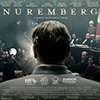 Based on the book The Nazi and the Psychiatrist by Jack El-Hai, Nuremberg, written and directed by James Vanderbilt, is a historical drama that centers on the aftermath of World War II and the efforts to bring Nazi leaders to justice. Psychiatrist Douglas Kelley (Rami Malik) is sent to oversee the mental fitness of high-ranking Nazi defendants before the start of the historic war crimes trial, including the notorious Hermann Göring (Russell Crowe). Robert H. Jackson (Michael Shannon) stands as chief prosecutor for the United States and is tasked with ensuring the Nazi regime answers for their horrific war crimes, while Colonel Burton C. Andrus (John Slattery) exercises strict discipline to prevent escapes or suicides among the prisoners before the trial.
 Recently, Slattery, Shannon, and Vanderbilt spoke with SciFi Vision about working on the film, which is now in theaters.
Watch the interview and read the transcript below.
MICHAEL SHANNON: Well, in the case of Robert H. Jackson, I felt an immense responsibility to be as accurate as possible, just because I have so much respect for what he accomplished, not only in this incident, but throughout his life. And for a lot of people, this may be the only time they actually hear about this gentleman, when they're watching this film, because I certainly didn't know much about him beforehand.
So, I just did a lot of research, but fortunately, it's pretty easy to find a lot of information about Robert Jackson. If you go online, there's a website devoted to his legacy. I would encourage people to take a look at that if they see the film and respect what he did.
SCIFI VISION: What about you, John?
JOHN SLATTERY: The gentleman that I played was a decorated soldier, long career, and this was one of his later assignments. It was one with a lot of downsides, a lot of risk and a lot of - it was very difficult.
And I mean, there isn't enough time in the film. It isn't about the character I played, obviously. So, you try to pick moments and elements of his personality that are going to serve the story.
You want to be respectful and responsible to both the story and the character, but trying to find - it's an entertainment too. You have to find a way to - I mean, I think this character, the function of this character, was to sort of move the proceedings along and maybe not let the audience forget that the stakes were high and not let the thing go off track, which was easily done. So, I mean, I understood the function of the character in the story, and with Jamie's help and collaboration, you try and figure out a way to make it most useful.
SCIFI VISION: Now, James, obviously this is a movie, but it's still very heavy subject matter, and some of it, I know it's hard to watch, especially going kind of from the courtroom scene on from there. Did it affect you at all, from an emotional standpoint, as a director? Were there any parts that you had trouble doing because of the kind of heaviness of the project?
JAMES VANDERBILT: Yeah, I mean, I think there were definitely moments. I think the biggest one is probably the day we showed the real footage from the camps, which I was sort of adamant about doing something that really happened in the courtroom. And I was adamant that we were going to show the real footage. We weren't going to shoot it. We weren't going to shoot anything for it. We weren't going to put music under it. It was just going to be the actual footage that was shown.
Then, with these wonderful actors, when they got cast, I sort of went to each of them. I said, “Look, I know you're going to do a lot of research on this, because that's the type of person, people you are, but do me a favor, don't look at the film. I know it's out there, but I would love for you to sort of save that experience for on the day.”
Then, that day we brought in a real projector. We didn't blue screen it. There were 300 extras in the courtroom, and I kind of went out and sort of said, “This is what we're doing today” and sort of explained it. We had a moment of silence, and then we set up four cameras on these guys and Russell and Rami, and we showed the film, and it was a really emotional day. It was a hard day, but I think it was one that we all were committed to going through in order to portray the reality of the situation.
But there are other days that were incredibly fun and exciting to work with them on. And I think one of the things I'm very proud about the movie is that it is not just beating you over the head with sadness. It is a thriller, and it's, I think, a real thrill ride. I think you have to have those lighter moments in order for those darker moments to resonate. But that day was the hardest day, I think, on the movie.
SCIFI VISION: We only have about a minute left, but really quickly, how has this experience changed you? Is there anything you learned or that really changed your lives after doing this?
JOHN SLATTERY: I think, like most people, I knew a little about this story. I think a lot of people know a little about it. They either studied in high school or whatever. And then you find out that the Doug Kelley character was involved and about Judge Jackson and how he became involved and how he had to basically cook up a lot of the strategy for this and the guy that I play and how he was involved.
So, I mean, I think smartly, Jamie, that is, chose an angle of a story that's a huge story. You can't tell the whole thing. And you've in a specific sort of angle into it that kind of creates a world in and of itself.

Latest Articles
Interviews
 Tommy & Tuppence: Josh Dylan and Antonia Thomas on Modernizing Agatha Christie
 Tuesday, 15 September 2026
 Jimmi Simpson Breaks Down Dillard’s Walker Family and His Shocking Turn on The Walking Dead: Dead City
 Sunday, 13 September 2026
 Aimee Garcia on Renata’s Hope, Trauma, and Walker Transformation in The Walking Dead: Dead City
 Sunday, 13 September 2026
 The Walking Dead: Dead City's Showrunner on Moving Maggie & Negan Forward, Episode 6 & Where a Potential Season 4 Could be Headed
 Thursday, 10 September 2026
 Dark Matter Season 2: Jennifer Connelly and Joel Edgerton on the Emotional New Season
 Saturday, 05 September 2026
 Dreams in Nightmares: Charlie Barnett, Sasha Compère & Mars Storm Rucker Talk Personal Truths & More
 Friday, 04 September 2026
 Murderbot: Hazel Baird and Rob Cawdery of Elastic on Creating the Emmy-Nominated Main Titles
 Monday, 24 August 2026
 Monarch: Legacy of Monsters - VFX Supervisor Sean Konrad on Designing Titans, Emmy-Nomination & More
 Sunday, 23 August 2026
 Son of Sara: Tymika Tafari on Carol's Devotion, Fight Scenes & Volume Two Hopes
 Tuesday, 11 August 2026

Reviews


